


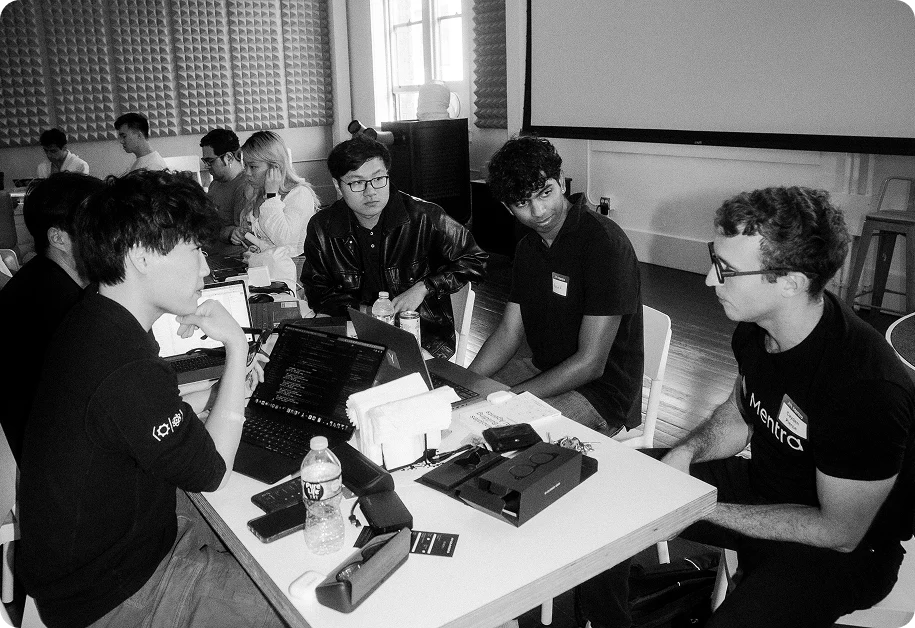
Mentra has an ambitious vision: to become the Android of smart eyewear. CEO Lena Park spelled it out plainly at their developer conference: an open platform, a hardware reference design, and a thriving ecosystem of third-party applications and frame manufacturers. It’s a bold bet in an industry dominated by walled gardens like Meta and Apple.
The smart glasses market is currently defined by closed ecosystems. Meta controls the software, hardware, and distribution of the Ray-Ban Meta glasses. Apple’s rumored AR glasses will almost certainly follow the same integrated approach. Google’s Android XR platform for glasses is still in its infancy. Into this landscape steps Mentra with a radically different philosophy: open platform, multiple hardware partners, and a developer-first approach.
What “Android of Smart Eyewear” Actually Means
The Android comparison is more than marketing hype — it maps directly to Mentra’s strategy. Just as Google created Android as an open operating system that any manufacturer could license and customize, Mentra is building a software platform that any eyewear brand can adopt. The company provides a hardware reference design, a comprehensive SDK, and a curated app store. Frame manufacturers supply the style and fit.
This model has fundamental advantages. It means that instead of one company deciding what smart glasses look like, dozens of brands can create designs for different tastes, budgets, and use cases. Oakley can make sport-focused smart glasses. Ray-Ban can make fashion-forward ones. Warby Parker can continue delivering its signature aesthetic. The platform handles the software, the AI, and the ecosystem — the frame makers handle the design.
The Mentra Platform Architecture
At the heart of Mentra’s offering is a reference hardware design that includes a modular compute module housing the processor, battery, sensors, and connectivity. Frame manufacturers design around this standardized module, connecting their own speakers, displays, and cameras through a well-defined interface. This is analogous to how Android handset makers design around Qualcomm Snapdragon reference platforms.
The Mentra SDK opens the platform to third-party developers. Imagine navigation apps that overlay directions on your lenses, fitness apps that display real-time metrics, productivity apps that show notifications and calendar events, or social apps that let you share your perspective hands-free. The SDK handles the heavy lifting of display rendering, audio processing, and sensor fusion, letting developers focus on their applications.
The Developer Ecosystem Challenge
Building a developer ecosystem is the hardest part of Mentra’s strategy. Developers won’t invest time learning a new platform without a critical mass of users, and users won’t buy smart glasses without compelling applications. It’s a classic chicken-and-egg problem that has defeated numerous platform plays in tech history.
Mentra is tackling this head-on with developer incentives, an early access program, and strategic partnerships with established app developers. The company has announced integrations with major navigation, messaging, and productivity apps at launch. They’re also courting indie developers with generous revenue sharing and co-marketing opportunities. Whether this will be enough to reach critical mass remains to be seen.
Hardware Partners and Potential
Mentra has already signed partnerships with several eyewear manufacturers, including some household names in the optical industry. The reference design supports multiple display technologies — from simple notification LEDs to full waveguide AR displays — giving partners flexibility in positioning and pricing. Entry-level Mentra-powered glasses could cost as little as $199, while premium models with advanced displays could reach $599.
The modular approach also means that a single compute module can outlast its frame. If you scratch your lenses or want a new style, you buy new frames, swap the module, and keep your data, settings, and app subscriptions intact. It’s a more sustainable model in an industry where most devices become e-waste when their aesthetic appeal fades.
How Does Mentra Compare to the Competition?
The contrast with competitors is sharp. Meta’s Ray-Ban partnership is a walled garden: Meta controls the entire experience, and users are locked into Meta’s ecosystem. Apple’s approach, when it arrives, will almost certainly be similarly closed. Even Google’s Android XR, while technically open, doesn’t offer the turnkey platform that Mentra is building for eyewear manufacturers specifically.
Mentra’s openness could be its greatest strength and its greatest weakness. An open platform invites innovation from unexpected places, but it also makes fragmentation, security concerns, and inconsistent user experiences more likely. Android phones suffered from these exact problems for years. Mentra will need to enforce quality standards while still delivering on the promise of openness.
The Vision Behind Lena Park’s Leadership
CEO Lena Park brings a unique perspective to the smart eyewear space. A veteran of both the mobile industry and the fashion tech world, she understands the intersection of technology and personal style. Her vision for Mentra is decidedly pragmatic: make smart glasses that people actually want to wear, powered by an ecosystem that gives them choice rather than locking them in.
“We don’t want to decide what smart glasses should look like. That’s a personal choice. We want to build the technology that makes them smart, and let the world’s best designers make them beautiful.”
— Lena Park, CEO of Mentra
The Verdict
Can Mentra become the Android of smart eyewear? The potential is real and the strategy is sound. The smart glasses market is early enough that no single platform has established dominance, and consumers have already shown they want choice in a product category that’s inherently personal and style-driven.
The obstacles are significant. Building a developer ecosystem from scratch is brutally hard. Convincing traditional eyewear manufacturers to bet on a startup platform requires trust. And the timeline from today’s early prototypes to a mature, mass-market ecosystem will be measured in years, not quarters.
But Mentra is asking the right question. In a future where many of us wear smart glasses, should one company control what we see and how we see it? An open alternative isn’t just desirable — it may be necessary. Whether Mentra is the company that delivers it will depend on execution, partnerships, and a bit of timing luck. But they’re building something worth watching.
