


Share This Article
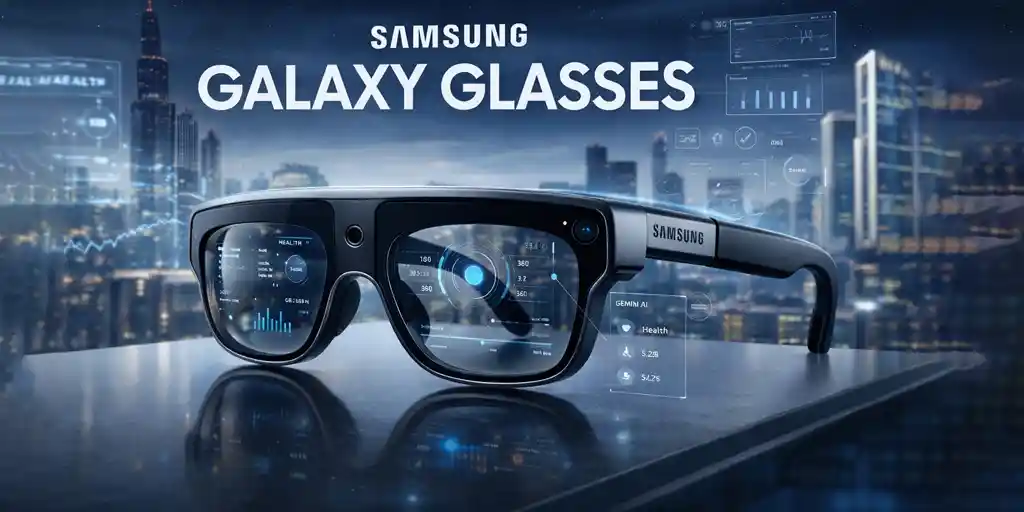
After years of rumors, leaks, and cautious teases, Samsung is finally ready to enter the smart eyewear arena. According to a report from Seoul Economic Daily, the company will unveil its first pair of AI-powered glasses — dubbed “Galaxy Glasses” — at its July 22 Unpacked event in London. The timing is strategic: Samsung is stacking its deck with the Galaxy Z Fold 8, Galaxy Z Flip 8, and Galaxy Watch 9 all sharing the same stage. But the glasses might be the most intriguing product of the bunch.
Here’s what makes this launch worth paying attention to, even if you weren’t planning to buy a pair of smart glasses in 2026.
No Display, No Problem
The first thing to know about the Galaxy Glasses: they don’t have a display. That might sound like a dealbreaker for anyone expecting full augmented reality overlays, but it’s actually a smart move. Samsung is taking the same approach as Meta’s Ray-Ban Stories — a camera, microphone, and speaker system packaged into a frame that looks like regular eyewear. This isn’t Google Glass 2.0. It’s a hands-free AI assistant you wear on your face.
The glasses will run Android XR, Google’s extended reality platform developed in partnership with Samsung and Qualcomm. That means deep integration with Google’s ecosystem — Gemini AI, Google Maps navigation cues, notification handling, and photo/video capture triggered by voice or touch. It’s a voice-first, AI-first form factor that doesn’t force you to look through a tiny heads-up display.
Samsung has also partnered with Gentle Monster, the South Korean eyewear brand known for bold, fashion-forward frames. That partnership matters more than most people realize. The biggest barrier to smart glasses adoption has never been the technology — it’s been the look. If you can’t wear them in a coffee shop without drawing stares, nobody buys them. Gentle Monster’s design language means these will actually look like glasses you’d choose to wear.
A July Launch With Everything On the Line
The July 22 event is shaping up to be Samsung’s most packed Unpacked in recent memory. Alongside the Galaxy Glasses, the company is expected to announce the Galaxy Z Fold 8, Galaxy Z Flip 8, a wider book-style foldable, and the Galaxy Watch 9 series. That’s a lot of hardware for one show. But putting the glasses alongside Samsung’s most popular products signals that the company is serious about this category — not just dipping a toe in the water.
The glasses are expected to go on sale sometime in the third quarter, which starts in July. That’s a relatively narrow window between announcement and availability, suggesting Samsung has been quietly stockpiling inventory.
One detail that stands out: the report specifically mentions that this first-generation Galaxy Glasses release is more like Meta’s existing products rather than a full AR headset. That’s a calculated bet. Meta has already proven there’s a market for camera-equipped AI glasses, and Samsung is in a position to do it better — better hardware, better AI integration through Gemini, and a wider distribution network.
What This Means for the Smart Eyewear Market
Samsung’s entry into smart glasses is a big deal for one simple reason: scale. The company sells tens of millions of Galaxy phones and watches every year. It has retail presence in virtually every country. If Samsung puts marketing weight behind the Galaxy Glasses, it normalizes the category in a way that Meta, with its Ray-Ban partnership, has only partially achieved.
Apple has been rumored to be working on glasses for years but hasn’t shipped anything consumer-facing beyond the Vision Pro. Google’s prototype work on AR glasses has been visible but never productized. Samsung could end up being the first major phone manufacturer to actually deliver smart glasses at scale.
The Takeaway
The Galaxy Glasses may not be the full AR experience enthusiasts dream about. But they don’t need to be. By focusing on AI-powered convenience in a familiar, stylish form factor, Samsung is making the smartest play possible: getting people comfortable with computer glasses before asking them to wear computer goggles. For anyone watching the wearable space, July 22 is a date to circle.
Source: Seoul Economic Daily
