


Share This Article
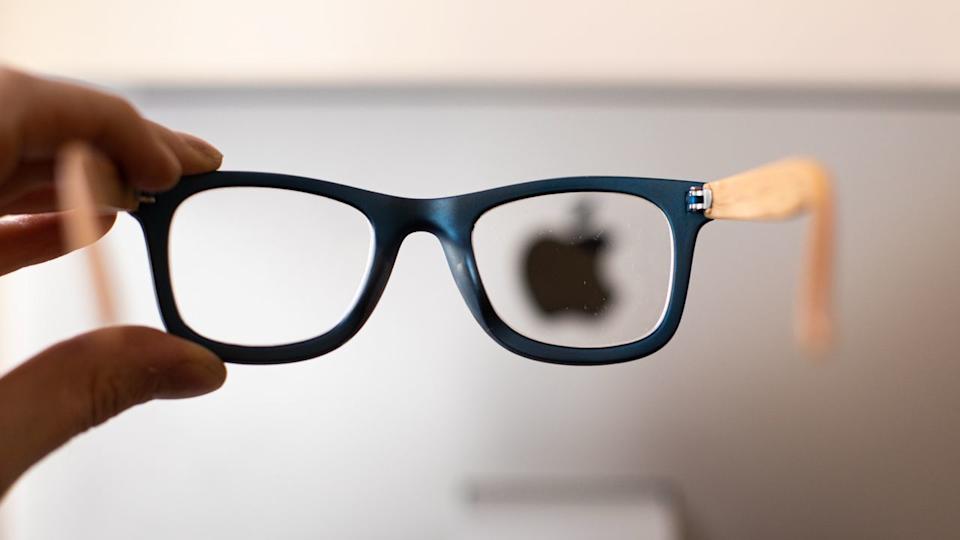
If you’ve been watching the smart glasses space, you’ve probably felt the shift coming. But when Apple starts testing four distinct frame designs — rectangular in large and slim, oval in larger and smaller — you know the race just got real.
According to reports from Bloomberg’s Mark Gurman (via TechCrunch), Apple is actively prototyping consumer smart glasses that look less like a headset and more like the frames you’d pick up at an optician. That’s the key distinction here, and it’s one the Vision Pro never quite figured out.
The Vision Pro Detour Was a Necessary Mistake
Let’s call it what it was: the Vision Pro was Apple’s luxury concept car — impressive, expensive, and never meant for mass adoption. Priced at $3,500 and weighing enough to feel like a workout, it taught Apple what not to do. The $1 billion-plus losses on the project weren’t wasted; they bought the company critical lessons about optics, passthrough, gesture control, and — most importantly — form factor.
The result? Apple is now racing toward something that competes directly with Meta’s Ray-Ban collaboration, which has quietly become the most successful smart glasses product on the market. Meta sold hundreds of thousands of units by focusing on what actually matters: looking good, taking calls, snapping photos, and running AI queries — all in a package that doesn’t make you look like you’re about to enter a holodeck.
Four Designs, One Strategy
The fact that Apple is testing four separate frame styles tells us something important: they’re not sure which one will stick. That’s a surprisingly humble approach from a company known for shipping one design and declaring it perfect. It suggests Apple is doing real consumer testing — something that smart glasses upstarts have been doing for years while Cupertino watched from the sidelines.
Rumor and industry signals point to a 2027 launch window. That may seem far off, but in hardware development cycles — especially for a product category with complex optics, battery engineering, and prescription lens integration — two years is tight.
What This Means for the Smart Glasses Market
Here’s what happens when Apple enters a category: the entire supply chain reorients. Component manufacturers prioritize Apple’s specs. Developers start building for Apple’s ecosystem. Competitors accelerate their timelines. And consumers suddenly have a trusted name to bet on.
The current smart glasses landscape is fragmented. You have Meta’s Ray-Ban line, the Xreal Air series, Even Realities’ G1, and a handful of others — each with different priorities, different software stacks, and varying degrees of polish. Apple entering the fray could standardize expectations around what a pair of smart glasses should do: camera, microphone, speakers, AI assistant, and maybe a small heads-up display — all in a frame that passes for normal eyewear.
The Hidden Challenge: Prescription and Form Factor
Billions of people wear prescription glasses. That’s not a niche — it’s the entire addressable market. Any smart glasses product that doesn’t handle prescriptions well will fail. Apple knows this. They’ve built partnerships with lens makers for years. Expect Zeiss or a similar partner to be part of the 2027 launch.
The other invisible challenge is weight distribution. Smart glasses pack batteries, cameras, processors, and antennas into a frame that needs to be comfortable for all-day wear. Meta’s Ray-Bans manage this by making the temples thicker — a compromise that works but limits style options. Apple’s obsession with industrial design suggests they’ll push for something sleeker.
The Takeaway for Eyewear Enthusiasts
If you’re in the market for smart glasses today, here’s the honest advice: don’t wait. The products available now from Meta, Xreal, and Even Realities are genuinely good and getting better. But if you’re someone who wants the tightest ecosystem integration and the best app support — and you can wait until 2027 — Apple’s entry is worth watching.
What’s clear is that smart glasses aren’t a gimmick anymore. They’re becoming the next computing platform, one frame at a time. And with Apple finally showing its hand, 2027 might be the year wearable computing stops being the future and starts being the present.
This article is based on reporting from Glass Almanac, which originally covered Apple’s four-design smart glasses testing, sourced from TechCrunch via Bloomberg’s Mark Gurman.
