


Share This Article
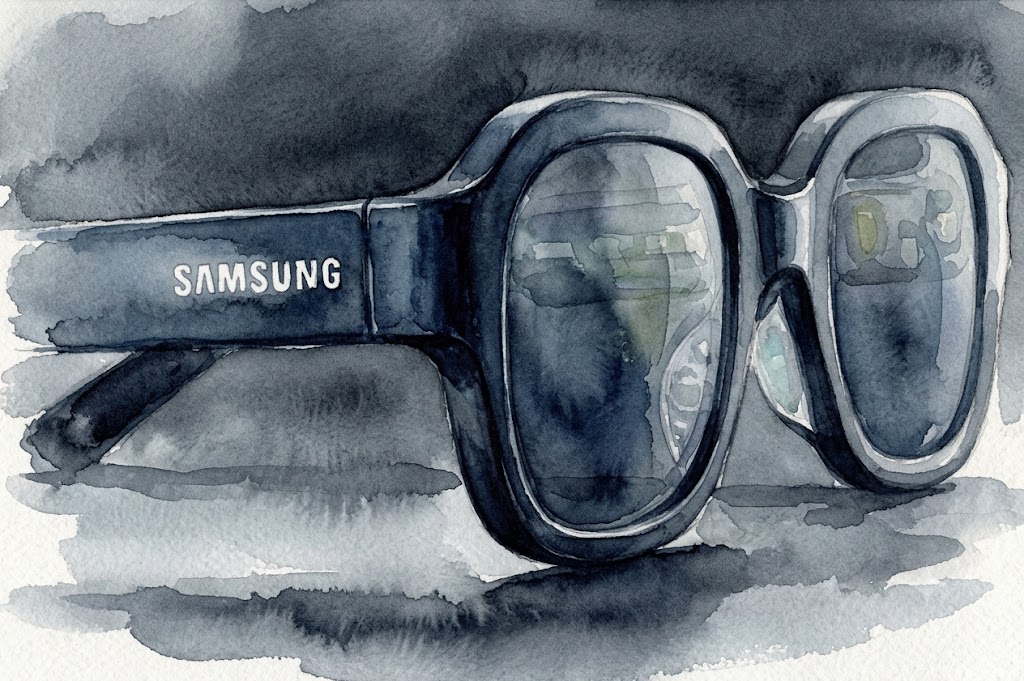
Samsung just confirmed what many of us have been waiting to hear: its first smart glasses are landing at Galaxy Unpacked on July 22nd, and they’re not a side project — they’re the centerpiece of a much bigger strategy.
Word broke Tuesday via Seoul Economic Daily, and it paints a picture far more ambitious than “Samsung makes Ray-Ban Meta knockoffs.” Yes, the specs sound familiar — cameras, mics, speakers, no display, running Google’s Android XR platform. But the way Samsung is positioning these glasses tells a different story than what Meta’s doing.
The Gentle Monster Connection
Samsung is partnering with South Korean eyewear brand Gentle Monster on design, which signals they understand the first rule of smart glasses: nobody wants to look like they’re wearing a gadget. Gentle Monster is known for bold, fashion-forward frames that people actually choose to wear. That’s the same playbook Meta used with Ray-Ban — make the tech disappear behind good design.
But here’s where it gets interesting. Google also announced partnerships with Warby Parker, Gucci parent company Kering, and Samsung at I/O this month for the first wave of Android XR glasses. That means Samsung’s device won’t exist in a vacuum — it’s the flagship entry in a whole platform play.
AI Ecosystem, Not Just a Wearable
The report explicitly states Samsung’s smart glasses will be positioned “not as a mere wearable device but as a core ‘edge device’ that completes its AI ecosystem.” That’s a fundamentally different pitch than “look, you can take hands-free photos and get AI answers in your ear.”
Samsung is building a connected AI mesh: your phone, your Galaxy Watch, your SmartThings appliances, and your glasses all working together. The glasses become always-on sensors and output devices for that ecosystem. A notification arrives — glance at your frames (no phone pick-up). Your washing machine finishes its cycle — subtle audio nudge. Your AI assistant sees what you see and offers contextual help without you asking.
That’s the vision. And it’s one nobody else has fully executed yet.
The Competitive Landscape
Meta currently dominates the smart glasses market with Ray-Ban Meta, now in its second generation. Apple has Vision Pro, but that’s a whole different category — spatial computing headset, not everyday eyewear. Google tried and failed with the original Glass. Xiaomi, Chinese competitor, is also in the mix.
Samsung has an advantage Meta doesn’t: a massive existing hardware ecosystem. Meta makes great glasses, but they don’t connect to your TV, your refrigerator, your smart lights, or your car. Samsung does. If the Galaxy Glasses integrate deeply with SmartThings, they become the remote control for your entire life — not just a camera on your face.
What About Displays?
For now, these initial units are reportedly audio-only — like the current Ray-Ban Meta. No heads-up display, no AR overlays. Camera, audio, and AI are the core features. However, industry reports suggest Samsung and Google are already developing more advanced Android XR units with actual display capability, possibly arriving in a future generation. Samsung’s dual-track approach makes sense: ship now to establish the platform and user base, then layer on displays once the tech is polished enough for all-day wear.
The Takeaway
Samsung’s Galaxy Glasses aren’t arriving as a novelty — they’re a strategic move in a game that’s about to get very crowded very fast. For anyone tracking smart eyewear, July 22nd is shaping up to be the most important date of the year. If Samsung executes on the ecosystem integration, these glasses could be the first truly compelling reason to wear a computer on your face every day.
Stay tuned — 2026 is shaping up to be the year smart glasses finally grow up.
Sources: Seoul Economic Daily, Road to VR
