


Share This Article
Most smart glasses are chasing the same consumer use case: notifications on your face, a camera for content, AI that helps you remember names. Viture just announced something refreshingly different — a pair of smart safety glasses for people who actually work with their hands and eyes.
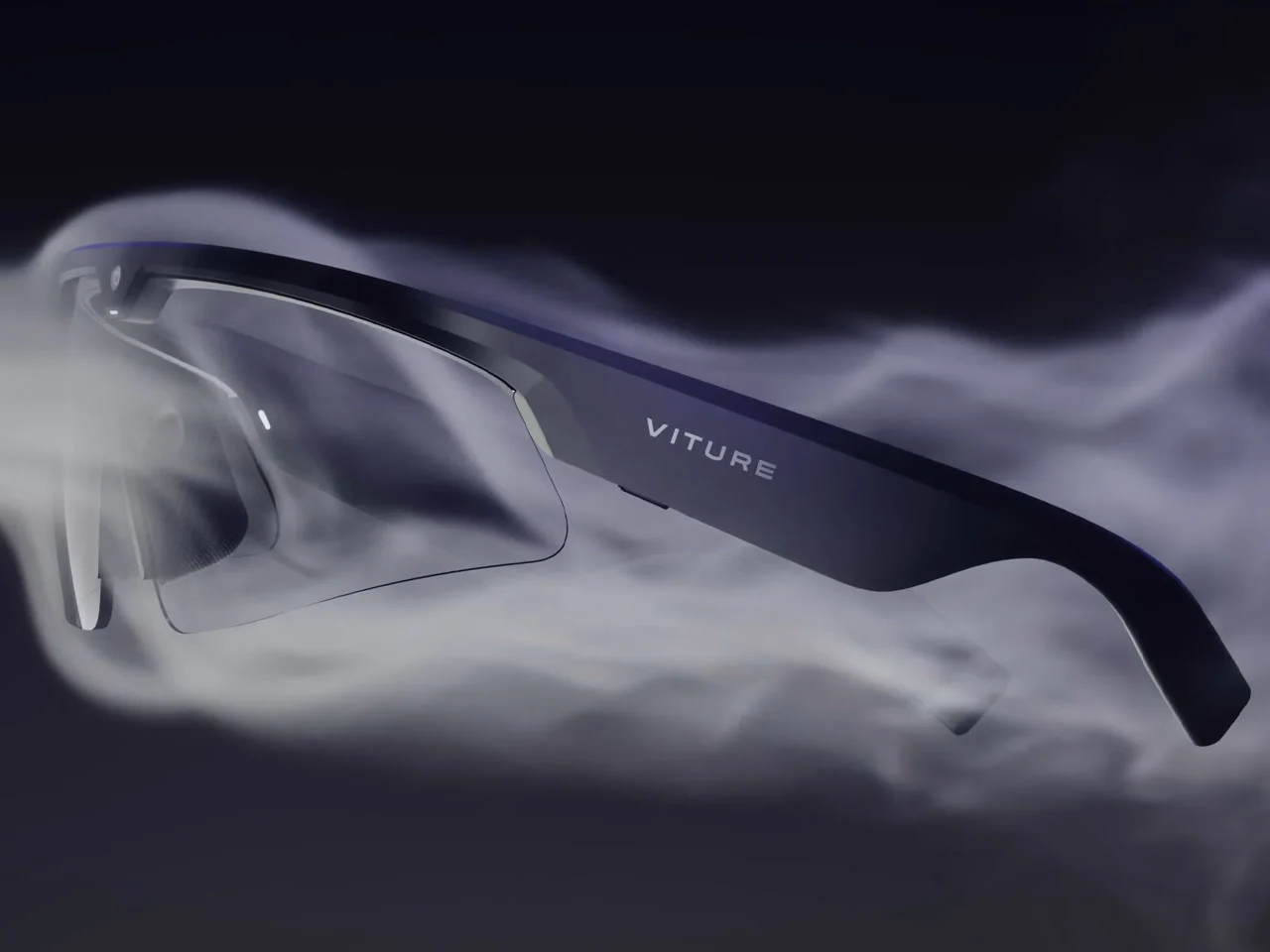
Meet the Helix: smart safety eyewear powered by NVIDIA’s XR AI, built for industrial, scientific, and clinical environments. And it might be the most practical wearable announcement out of AWE 2026.
What It Does
The Helix is a standalone device — no phone tether needed. It packs a 12MP first-person camera and a four-microphone array that streams your perspective to NVIDIA’s multimodal AI in real time. That AI can “see” what you’re looking at, “reason” about it, and coach you through procedures.
Think a field technician repairing equipment they’ve never seen before, with Helix whispering the steps. Or a surgeon navigating an unfamiliar instrument. Or a lab researcher running a protocol — the AI watches, verifies, and corrects before mistakes compound.
Viture has been working with Stanford’s Le Cong Lab and Princeton’s Mengdi Wang Lab to validate this in clinical and life science settings. That’s not just marketing fluff — these are real research environments where AI-assisted workflow matters.
The Specs That Matter
- 12MP front camera — good enough for detailed visual AI analysis
- 4-microphone array — voice input and environmental audio capture
- 60+ minutes of charge-while-using battery — theoretically unlimited runtime if you can plug in
- WiFi + Bluetooth 5.3 — standalone operation
- No companion device needed — Helix works entirely on its own
Pricing starts at $600 with reservations open now, though actual shipping isn’t until Q1 2027.
Why This Matters for Smart Glasses
The consumer smart glasses market is dominated by Meta Ray-Bans and a pack of media-consumption headsets. Viture is carving out a lane that’s been underexplored: productivity eyewear for professionals.
Safety glasses are already ubiquitous in industrial environments. Adding AI to something workers already wear is a much easier sell than convincing people to adopt an unfamiliar form factor. The ROI is obvious — faster procedures, fewer errors, less downtime. You don’t need to convince a factory manager that AI-assisted workflow saves money.
Viture’s Broader Momentum
Viture has been quietly building a real portfolio. Beyond Helix, they’ve got glasses that pair with the Nintendo Switch 2, a spatial neckband, and custom controllers. The company recently switched to Sony panels for better color saturation and pixel density, signaling a commitment to display quality that not every player in this space shares.
If Helix delivers on its promise, it could be the first smart glasses product that enterprises actually buy in volume — not as a pilot program, but as standard issue.
The smart glasses race isn’t just about who wins the consumer market. Viture just made a strong case that the real money might be on the job site.
—
Source: Yahoo Tech / Android Central
