


Share This Article
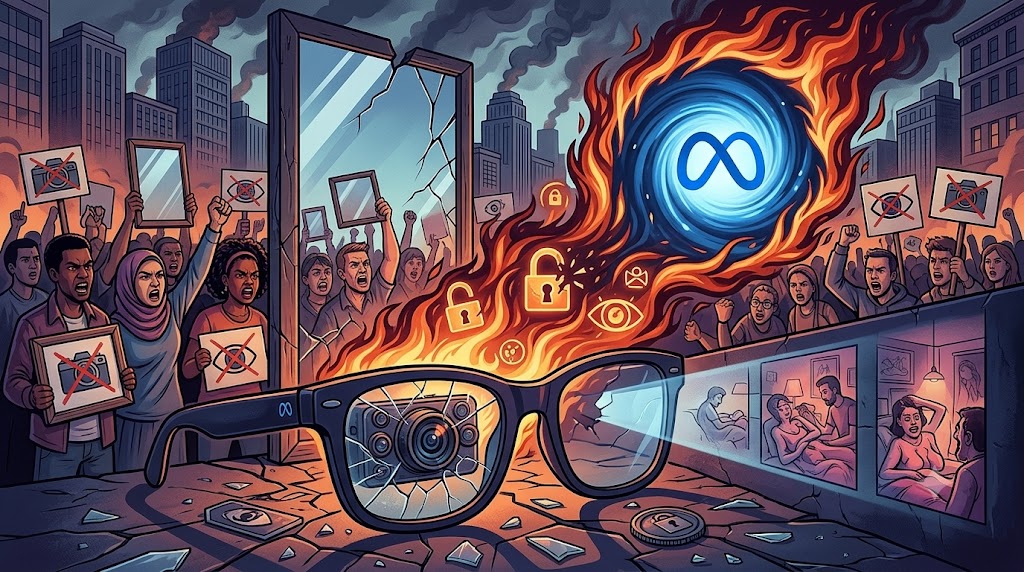
The smart glasses industry is learning a hard lesson: putting cameras on people’s faces invites a social reaction that no optical technology can solve. Meta’s latest glasses launch has triggered an eruption of hostility across social media, reviving a debate that started with Google Glass in 2013 and never really went away.
Two weeks after Meta debuted cheaper smart glasses under its own brand — cutting ties with the Ray-Ban name and partnering with Kylie Jenner — the backlash has been fierce. Threads, the company’s own platform, has become ground zero for the fight. Posts accusing Meta glasses of being “for perverts” have racked up tens of thousands of likes. Calls to snatch glasses off strangers’ faces are circulating openly. Some women are buying the glasses specifically to record men who harass them, turning the surveillance tools back on the abusers.
The vitriol isn’t coming from nowhere. Recent investigations by The New York Times and Wired revealed that Meta has been considering facial recognition features for its glasses. High-profile incidents of harassment captured on smart glasses have made national headlines. And Meta’s decision to cast Kylie Jenner as its brand ambassador struck many as tone-deaf: a celebrity who built an empire on controlled, curated imagery fronting a product family whose most unsettling use case is the capture of uncontrolled, uncurated footage.
The timing is tricky for Meta. On one hand, the company has a genuine hardware hit on its hands. The Ray-Ban Meta line sold over a million units in 2024, validating consumer appetite for AI-embedded eyewear. On the other, every new batch of users brings new tensions into public spaces. The LED privacy indicator light on the glasses is easy to miss. Battery life is short enough — less than an hour with continuous video — that the actual surveillance capability is limited. But perception matters more than technical specs when the social contract around cameras is at stake.
The arguments cut both ways. Accessibility advocates point to hands-free video for parents filming their kids or creators documenting their lives without holding a phone. Some users argue that smartphones are already surveillance devices and that singling out glasses is arbitrary. But the form factor matters: a phone you pull out deliberately is a different social object than a camera embedded in something that lives on your face.
Netflix’s comedy-drama “A Man on the Inside” inadvertently captured the tension. The protagonist wears Ray-Ban Meta glasses to covertly investigate a retirement home, and the show’s climax hinges on the moment when his friends discover they’ve been secretly recorded. It’s played for drama, but it maps directly onto the real-world anxiety: how do you know when someone’s glasses are just glasses?
The industry is at a crossroads. Meta is betting that familiarity will erode the stigma, the same way smartphones normalized always-on cameras in everyone’s pocket. But glasses sit on the face, pointed where the wearer looks — a fundamentally different relationship to privacy. Whether the social friction fades or intensifies will determine whether camera glasses ever reach mainstream adoption, or remain a niche that society keeps at arm’s length.
Source: The Verge
